Foxboro DCS Compact FBM241/c/d, Redundant, Discrete I/O Modules
Foxboro DCS Compact FBM241/c/d, Redundant, Discrete I/O
Modules
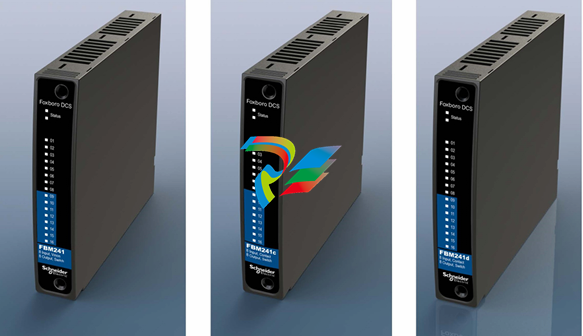
The Compact FBM241. FBM241c, and FBM241deach have eight discrete inputs and
eight discrete outputs available as a single or redundant module. A redundant pair of
the modules combine to provide redundancy at the FBM level with field I/O wired to
one commontermination assembly.
The Compact Channel Isolated, Discrete I/O Interface Modules (Compact FBM241/c/
d) have eight discrete input channels and eight discrete output channels. Associated
termination assemblies (TAs) support discrete input or output signals at voltages of
under 60 VDC, 120 VAC/125 VDC, or 240 VAC.
Depending on the type of I/O signal required, the TAs contain current limiting devices,
fuses, relays, or relay outputs with internal or external power source and fusing.
The module is available in three distinct types and each type with its associated TA
supports the following discrete inputs and outputs:
Each type of Fieldbus Module (FBM), without signal conditioning, uses a 15 to 60
VDCinput or output signal. Each discrete input and output is galvanically isolated
from other channels and ground. When used with external excitation, each discrete
input and output is group isolated.
The module performs signal conversion required to interface electrical input signals
from field sensors to the optionally redundant fieldbus. It executes the Discrete I/O or
Ladder Logic program, with the following configurable options: Input Filter Time, Fail
Safe Configuration, Fail-Safe Fall-Back, and Sustained or Momentary Outputs. If the
Momentary Output configuration is selected, then Pulse Output Interval is also
configurable
Features
• 8discrete inputs
• 8discrete outputs
• Single or Redundant Module
• Supports discrete inputs/output signals at voltages of:
◦ 15to60VDC
◦ 120VAC/125VDC
◦ 240VAC
• Eachinput and output is galvanically isolated: group isolated when used with
external excitation
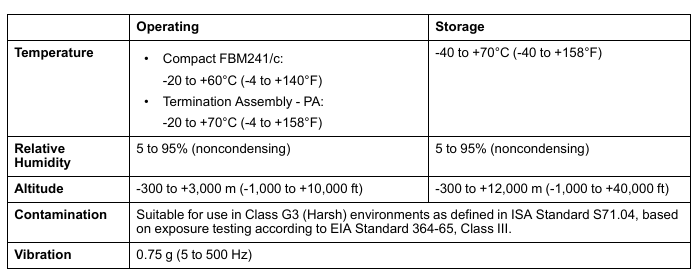
• Compact,rugged design suitable for enclosure in Class G3 (harsh) environments
• Executes the Discrete I/O or Ladder Logic program, with the following
configurable options: Input Filter Time, Fail Safe Configuration, Fail-Safe Fall
Back, and Sustained or Momentary Outputs
• Various Termination Assemblies (TAs) that contain:
◦ Current limiting devices
◦ Fuses
◦ Relayoutputs
◦ Relayoutputs with internal or external power source and fusing
◦ Solid state outputs
Redundant Outputs
Aredundant contact output function block, COUTR, is used for each redundant pair of
outputs. The COUTR block handles output writes and initialization logic for the
redundant channels. On each write of the COUTR block, identical output writes are
sent to both modules, fully exercising the Fieldbus and the logic circuitry of each
module. You can select a sustained output that follows the block input or a pulsed
output with a selectable pulse width.
Whenafailure is detected in the modules, its output is marked as BAD and the
corresponding channel in the good module automatically continues to drive the
discrete outputs. Each output channel drives an externally powered load. Power for
each Compact FBM241 module is diode OR’d together in the redundant adapter to
help assure redundant power. The microprocessor of each module executes the
digital output application program, plus diagnostic routines that validate the health of
the FBM.
Compact Design
The Compact FBM241’s design is narrower than the standard 200 Series FBMs. It
has a rugged Acrylonitrile Butadiene Styrene (ABS) exterior for physical protection of
the circuits. Enclosures specially designed for mounting the FBMs provide various
levels of environmental protection, up to harsh environments, per ISA Standard
S71.04
Visual Indicators
Light-emitting diodes (LEDs) incorporated into the front of the module provide visual
indication of the Fieldbus Module operational status, as well as the discrete states of
the individual input and output points.
Easy Removal/Replacement
The module mounts on a Compact 200 Series baseplate. Two screws on the FBM
help secure the module to the baseplate.
The module can be removed or replaced without removing field device termination
cabling, power, or communication cabling.
Redundant modules must be located in adjacent positions on the baseplate, with the
first module located in an odd-numbered position (for example, the positions labelled
3 and 4). To achieve redundancy, a redundant adapter module is placed on the two
adjacent baseplate termination cable connectors to provide termination for a single
cable. A single termination cable connects from the redundant adapter to the
associated termination assembly (TA).
Whenredundant, either module can be replaced without upsetting field input signals
to the good module. Each module can be removed or replaced without removing field
termination cabling, power, or communications cabling
Fieldbus Communication
AFieldbus Communications Module or a Control Processor interfaces to the
redundant 2 Mbps module Fieldbus used by the FBMs. The Compact FBM241/c/d
accepts communication from either path (A or B) of the redundant 2 Mbps Fieldbus. If
one path is unsuccessful or is switched at the system level, the module continues
communication over the active path.
Modular Baseplate Mounting
The modules mount on a DIN rail mounted modular baseplate, which accommodates
up to 16 compact FBMs. The baseplate is either DIN rail mounted or rack mounted,
and includes signal connectors for redundant fieldbus, redundant independent DC
power, and termination cables.
Security
Field power for contacts or solid state switches is current limited.
Termination Assemblies
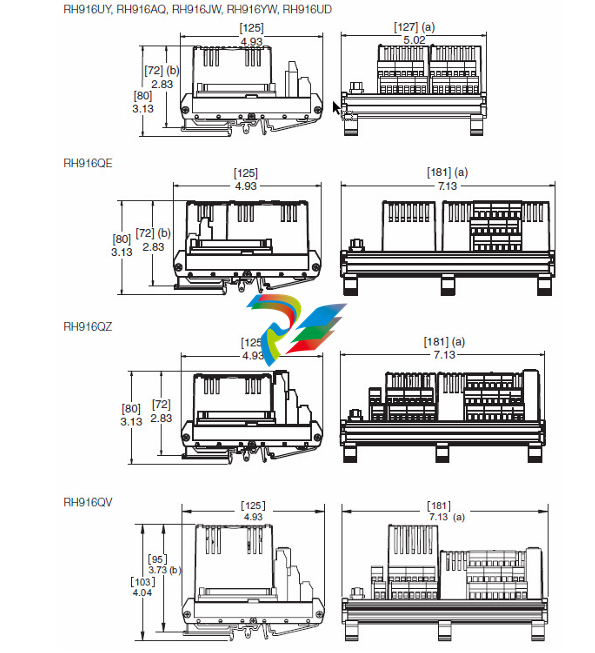
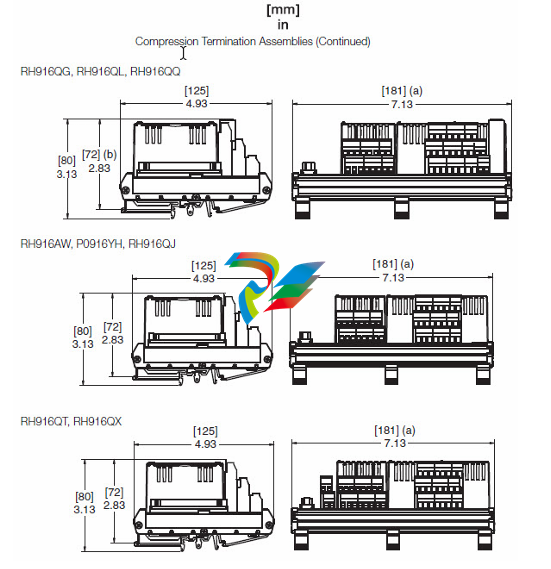
Field I/O signals connect to the FBM subsystem via DIN rail mounted TAs. The TAs
used with the Compact FBM241/c/d are described in Termination Assemblies And
Cables, page 14.
The redundant adapter connects the redundant FBM’s baseplate connectors together.
The redundant adapter provides a single termination connection to a single TA.
Termination Assemblies and Cables
Field I/O signals connect to the FBM subsystem via DIN rail mounted termination
assemblies (TAs). Multiple types of TAs are available with FBMs to provide I/O signal
connections, signal conditioning, optical isolation from signal surges, external power
connections, and/or fusing for protection of the FBM and/or field device as required by
the particular FBM. Since these features are built into the termination assemblies
(where required), in most applications there is no need for additional termination
equipment for field circuit functions such as circuit protection or signal conditioning
(including fusing and power distribution).
The DIN rail mounted termination assemblies connect to the Compact FBM baseplate
by means of removable termination cables. The cables are available in a variety of
lengths, up to 30 meters (98 feet), allowing the termination assemblies to be mounted
as needed by plant design. See Functional Specifications- Termination Assemblies,
page 16 for termination cable part numbers and specifications.
Discrete Inputs
Termination assemblies with discrete inputs support eight 2-wire discrete input signals
at passive low voltage levels of less than 60 VDC and active high voltage levels of
125 VDC, 120 VAC, or 240 VAC. Active termination assemblies support input signal
conditioning for FBMs. To condition signals, these termination assemblies can provide
optical isolation, current limiting, noise reduction, voltage attenuation, or optional
terminal blocks to connect externally supplied excitation voltage.
LowVoltage Discrete Inputs
The low voltage inputs (less than 60 VDC) use passive termination assemblies. Inputs
can either be voltage monitor, switched or contact sense types. Voltage monitor inputs
require an external field voltage source. Contact sense input use the FBM auxiliary
+24 VDCpowersupply to wet field contacts.
Aload may not be required for proper operation of the input channels. A diode may be
required for a DC inductive load only.
High Voltage Discrete Inputs
The high voltage input circuits support 125 VDC, 120 VAC, or 240 VAC. Inputs can be
either voltage monitor or switched types. Voltage monitor inputs require a field voltage
source. Switch inputs use customer supplied excitation voltage applied to dedicated
terminals on the termination assembly and distributed on the termination assembly to
each of the input channels.
These circuits are located on daughter boards that are mounted under the component
covers of the termination assemblies
Discrete Outputs
Termination assemblies with discrete outputs support eight 2-wire discrete output
signals at passive low voltages of less than 60 VDC and active high voltage levels of
120 VACor240VAC.Active termination assemblies support output signal
conditioning for FBMs. To condition signals, these termination assemblies provide
fuse protection, relays, solid-state devices, and terminal blocks to connect externally
supplied optional power distribution.
LowVoltage Discrete Outputs
The low voltage outputs (less than 60 VDC) use passive termination assemblies.
These assemblies are available with and without output protection (fusing).
Termination assemblies with protection have individual user serviceable fuses that are
designed to limit the output current to 2 A. Eight vertically mounted, one per channel,
3.15 A sand filled fuses (temperature derated) allow a maximum of 2 A current per
output channel. Termination assemblies without fusing (unprotected) are intended for
use by Foxboro engineers or customers who are using interposing relays or fuse
terminal blocks between the termination assembly and the field devices.
Power for the low voltage outputs can be supplied by the FBM +24 VDC auxiliary
power supply (internally (FBM) sourced) or by a field voltage
-
 CTI 2559-TC 8-Channel Thermocouple Input Module
 -
 CTI 2556-A 16-Channel Isolated Thermocouple Input Module
 -
 CTI 2556 16-Channel Isolated Thermocouple Input Module
 -
 CTI 2551-A 8-Channel Isolated Thermocouple Input Module
 -
 CTI 2559-RTD 8-Channel RTD Input Module
 -
 CTI 2557-A 16-Channel RTD Input Module
 -
 CTI 2557 16-Channel RTD Input Module
 -
 CTI 2552-A 8-Channel Isolated RTD Input Module
 -
 CTI 2534 8-Point Form-C Relay Output Module
 -
 CTI 2532 16-Point Form-A Relay Output Module
 -
 CTI 2531 32-Point Form-A Relay Output Module
 -
 CTI 2530 8-Point Form-C Relay Output Module
 -
 CTI 2562 8-Channel Analog Output Module
 -
 CTI 2560-A 8-Channel Isolated Analog Output Module
 -
 CTI 2501 8in/4out Analog Module
 -
 CTI 2558 8-Channel Analog Input Module
 -
 CTI 2555-A 16-Channel Analog Input Module
 -
 CTI 2550-A 8-Channel Isolated Analog Input Module
 -
 CTI 2599 8/16/32-Point AC Output Module
 -
 CTI 2598-8 8-Point AC Output Module
 -
 CTI 2598 8/16-Point AC Output Module
 -
 CTI 2597 8/16/32-Point DC Output Module
 -
 CTI 2596-8 8-Point DC Output Module
 -
 CTI 2596 8/16-Point DC Output Module
 -
 CTI 2595 16-Point TTL/Word Output Module
 -
 CTI 2591-EF 16-Point Isolated 11-146 VDC Output with Front Panel Accessible Fuses
 -
 CTI 2591-A 16-Point Isolated 11-146 VDC Output Module
 -
 CTI 2590-EF 16-Point Isolated 20-132 VAC Output with Front Panel Accessible Fuses
 -
 CTI 2590-A 16-Point Isolated Discrete 20-132 VAC Output Module
 -
 CTI 2589-B 8/16/32-Point Universal Discrete Input Module
 -
 CTI 2589-A 8/16/32-Point Universal Discrete Input Module
 -
 CTI 2588-8 8-Point Universal Discrete Input Module
 -
 CTI 2585 16-Point TTL/Word Input Module
 -
 CTI 2582 16-Point Isolated 125 VDC Input Module
 -
 CTI 2581 16-Point Isolated 12-56 VDC Input Module
 -
 CTI 2580 16-Point Isolated 95-132 VAC Input Module
 -
 CTI 2500-TAP RS485 Network Tap
 -
 CTI 2500-RIO-B RS485 Remote Base Controller
 -
 CTI 2500-RIO-A RS485 Remote Base Controller
 -
 CTI 2500-RBC Profibus Remote Base Controller
 -
 CTI 2515-A 100-Watt AC/DC Power Supply with Redundancy Support
 -
 CTI 2515 100-Watt AC Power Supply (MATURE - replaced by 2515-A)
 -
 CTI 2513-A 75-Watt DC Power Supply with Redundancy Support
 -
 CTI 2513 75-Watt 24VDC Power Supply
 -
 CTI 2512-A 75-Watt AC/DC Power Supply with Redundancy Support
 -
 CTI 2512 75-Watt AC/DC Power Supply
 -
 CTI 2510 125 VDC Power Supply
 -
 CTI 2500-SSB Single Slot Blank Front Panel
 -
 CTI 2500-R11-A Eleven-Slot Redundant Base
 -
 CTI 2500P-R16 Sixteen-Slot Base with High-Speed Channel
 -
 CTI 2500P-R8 Eight-Slot Base with High-Speed Channel
 -
 CTI 2500P-R4 Four-Slot Base with High-Speed Channel
 -
 CTI 2541 Redundant Processor Manager Module
 -
 CTI 2577 Profibus DP Slave Adapter
 -
 CTI 2573-MOD Serial Interface Adapter with MODBUS
 -
 CTI 2572-AF Fast Ethernet TCP/IP Adapter with Optical Fiber Connection
 -
 CTI 2572-A Fast Ethernet TCP/IP Adapter
 -
 CTI 2572 Ethernet TCP/IP Adapter
 -
 CTI 2572-B Fast Ethernet TCP/IP Adapter
 -
 CTI 2576 DeviceNet™ Scanner Module (MATURE)
 -
 CTI 2500P-ECC1 Ethernet Communications Coprocessor
 -
 CTI 2500P-JACP Janus Application Coprocessor
 -
 CTI 2500P-ACP1 Application Coprocessor (MATURE - replaced by 2500P-JACP)
 -
 CTI 2500P-J450 Janus PAC with 2MB Project Memory
 -
 CTI 2500-C400 CPU with 3072K User Memory
 -
 CTI 2500-C300 CPU with 512K User Memory
 -
 CTI 2500-C200 CPU with 256K User Memory
 -
 CTI 2500-C100 CPU with 128K User Memory
 -
 CTI 2500P-J750 Janus PAC with 3MB Project Memory
 -
 Shinkawa WHF3006M Displacement Converter
 -
Shinkawa JBP-220 (P-24-94A / P-24-94B) Circuit Board Module
-
 SHINKAWA WKN-142K5 2-WIRE VIBRATION TRANSDUCER
 -
Shinkawa FRP-321 (P-26-54A / P-26-54B) Circuit Board Module
-
 Shinkawa IOP-160 (P-25-72A / P-25-72B) Circuit Board Module
 -
 Shinkawa PK-147B-1 / PK-147A-1 Circuit Board Module
 -
 Shinkawa CPP-91A Circuit Board Module
 -
 Shinkawa FRP-177 PCB Module
 -
 Shinkawa CPP-127 (P-26-74A / P-26-74B) Circuit Board Module
 -
Shinkawa FRP-227 (P-24-86A / P-24-86B) Circuit Board Module
-
 Shinkawa MDP-104 (P-25-83A / P-25-83B) Circuit Board Controller
 -
 Shinkawa VK-143P2 High-precision eddy current sensor driver/signal conditioner
 -
 Shinkawa FRP-226 (P-24-86A / P-24-86B) Circuit Board Module
 -
Shinkawa CPP-107A P-22-99A P-22-99B Circuit Board Module
-
 SHINKAWA VW-202AL-8 Axial Displacement Sensor
 -
Shinkawa VL-202A08L-1A42 Vibration Sensor Transducer Probe
-
Shinkawa VL-202A08L-1A42 Vibration Sensor Transducer Probe
-
 Shinkawa FRP-209A & FRP-206 Wire Bonder Circuit Board Module
 -
 Shinkawa MGP-72 MGP72 P-26-50A P-26-50B Circuit Board Module
 -
 Shinkawa FRP-249 P-25-1A P-25-1B Circuit Board Module
 -
Shinkawa FRP-320 P-26-54A P-26-54B Circuit Board Module
-
Shinkawa FRP-282 P-24-35A P-24-35B Circuit Board Module
-
 Shinkawa FRP-338 P-26-54A P-26-54B Circuit Board Module
 -
 GE IS200AEPBH1B IS200AEPBH1B‑REV‑AA Pitch-Charger Control PCB Board
 -
 GE IS200EDEXG1ADA EX2100 SCR Trigger Control Board
 -
 GE 151X1207CK01SA01 IS200EDEXG1A EX2100 SCR
 -
 GE 151X1233DD02SA02 IS200AEPBH1B - Variant for pitch control charger assembly
 -
 GE 151X1233DB01SA01 IS200AEPBH1B - 10kW Wind Power Converter
 -
 GE 151X1233DB01SA01R | IS200AEPBH1B 10KW Converter
 -
GE 151X1233DD01SA02 Pitch Battery Charger (109W6931P001)
-
GE 151X1233DD01SA02 Pitch Battery Charger Assy IS200AEPBH1B
-
 GE 151X1233DB02SA02 Rev A IS200AEPBH1B Wind Turbine Converter
 -
 GE 151X1207CK02SA02 SCR 4400 V 1850 A IS200EDEXG1ADA General Electric EX2100
 -
 Triconex 3723X 32-Channel TMR Analog Input Module with HART
 -
 SHINKAWA VM-21G SIGNAL CONDITIONER SOCKET
 -
SHINKAWA VM-21R REVOLUTION SIGNAL CONDITIONER
-
SHINKAWA VM-21T DISPLACEMENT INPUT THRUST SIGNAL CONDITIONER
-
SHINKAWA VM-21D 6-WIRE LVDT SIGNAL CONDITIONER
-
 SHINKAWA VM-21P 3-WIRE LVDT SIGNAL CONDITIONER
 -
SHINKAWA VM-21A VIBRATION SIGNAL CONDITIONER
-
SHINKAWA VM-21K DISPLACEMENT INPUT VIBRATION SIGNAL CONDITIONER
-
 SHINKAWA VM-25S01 CONDITION MONITORING SYSTEM
 -
SHINKAWA VM-25 CONDITION MONITORING SYSTEM
-
SHINKAWA VM-772B DEVICE CONFIG
-
SHINKAWA VM-771B MCL VIEW
-
 SHINKAWA VM-76B INSTRUMENT RACK
 -
SHINKAWA VM-75B POWER SUPPLY MODULE
-
 SHINKAWA VM-742B NETWORK COMMUNICATION MODULE
 -
 SHINKAWA VM-741B LOCAL COMMUNICATION & PHASE MARKER MODULE
 -
SHINKAWA VM-722B 9-CHANNEL RELAY MODULE
-
SHINKAWA VM-707B AERODERIVATIVE GAS TURBINE MONITOR MODULE
-
 SHINKAWA VM-706B ROD DROP MONITOR MODULE
 -
 SHINKAWA VM-705B 18-CHANNEL TEMPERATURE MONITOR MODULE
 -
SHINKAWA VM-704B TEMPERATURE MONITOR MODULE
-
 SHINKAWA VM-702B ABSOLUTE VIBRATION MONITOR MODULE
 -
SHINKAWA VM-701B VIBRATION / DISPLACEMENT MONITOR MODULE
-
 SHINKAWA MODEL VM-5X INTERFACE UNIT
 -
 SHINKAWA MODEL VM-5W2 DUAL POWER SUPPLY INSTRUMENT RACK
 -
 SHINKAWA MODEL VM-5H4 INSTRUMENT RACK (for VM-5Z5.6.7)