Woodward 85018V2 505E Digital Governor for Extraction Steam Turbines
85018V2
505E Digital Governor
for Extraction Steam Turbines
505 HMI Software
Woodward offers two different HMI software packages, OpView and 505View,
which allow an operator to remotely view operating inputs, adjust control
setpoints, issue Run mode commands, and monitor/troubleshoot the turbine
control. Both HMI packages are self-configuring which eliminates all field
engineering—they automatically configure their screens to match the control's
programmed application.
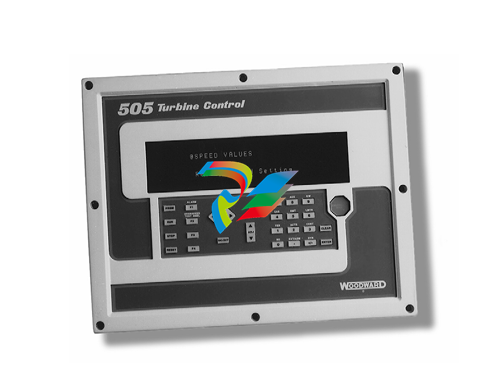
The OpView is comprised of an industrialized NEMA 4 touchscreen hardware
package bundles together with a Woodward developed software interface
program. The 505View is a unbundled Intellution-based software package that
runs on a pc (hardware can be optionally purchased). Both HMI packages are
pre-configured to communicate via Modbus® * protocol with either a 505 or 505E
Woodward steam turbine control and offer the following features.
*—Modbus is a trademark of Schneider Automation Inc.
Automatic Screen Generation based on control configuration
Security with multiple User Levels
Remote Access Capability1
Real-Time and Historical Trending2
Alarm/Trip Status Indication
Alarm/Trip Log with Time Tagging and First-Out Indication
I/O and System Troubleshooting
Graphic System Control screens
Event Status Logging and History3
Notes:
1 505View only
2 OpView has Real-Time Trending only; 505View has both
3 OpView has Logging only; 505View has Logging and History
automatically configures its screens to match the 505E’s programmed
application. If the 505E is not configured to accept Modbus commands, the HMI
functions as a system monitor only. If the 505E is configured to accept Modbus
commands, all 505E Run Mode operations can be monitored and performed
through it (start, stop, mode enable/disable, setpoint raise/lower). For safety
purposes, the Overspeed test function can not be performed through the HMI.
See Volume 1. Chapter 7 of this manual for more information on programming
Modbus ports.
User-friendly touch screens allow operators to view and control multiple modes of
operation and setpoints from one screen. Ten different screens are available to
allow operators the flexibility of viewing. These screens display the following
information:
Controlling parameter information
Complete starting sequences
Turbine and/or Generator information
Speed, Extr/Adm, Aux, Casc, & Limiter information
Analog Input and Output levels
Contact Input and Relay Output states
Alarm and Shutdown Log
The OpView or 505View can interface with the 505E through serial RS232.
RS422. or RS485 communications. By using RS422 or RS485 communications,
the HMI can be located up to 4.000ft (1.220meters) from the 505E digital control.
Digital Remote Final Driver
Digital Remote Final Driver (DRFD) is used to interface the 505E digital control to
existing valve operators or Woodward actuators that are integrating in action or
are not compatible with the 505E.
The 505E’s actuator outputs have the capability of driving a 4–20 mA or 20–160
mA (200 mA max) proportional signal into an actuator coil. These 505E actuator
output signals represent a demand signal equal to desired valve position
(proportional). If the application’s actuator or servo assembly requires a different
drive signal, or control action (integrating with a null setting), a Digital Remote
Final Driver or equivalent device must be used.
Woodward Digital Remote Final Drivers accept a 4–20 mA actuator-drive signal
proportional to desired valve position, and position a servo assembly accordingly.
Integrating or proportional type DRFDs are available depending on the servo
assembly being interfaced to. Woodward DRFDs have the capability of driving
unipolar or bipolar actuator demand signals, up to 0–400 mA or +400 mA
respectively.

The Digital Remote Final Driver is housed in a NEMA-4X enclosure with a hinged
cover and consists of driver and power supply modules. The driver module uses
plug-in jumpers and an alphanumeric display to facilitate field configuration and
calibration.
Proportional type DRFDs can provide an output drive signal of up to 400 mA, to
be compatible with existing servo assemblies. This drive signal is proportional to
the 4–20 mA input signal received from the 505E digital control.
Integrating type DRFDs sense actual valve position (through, LVDTs, RVDTs,
MLDTs, or DC position feedback devices), compare this signal to the input
position demand signal from the 505E, and output a drive signal to position a
servo assembly accordingly. See Figure 1-2.
Please refer to Woodward Product Spec 85532 for more information on DRFDs
and their capabilities.
Real Power Sensor
A Real Power Sensor is used to sense the real power produced by a generator
or flowing through a tie line. Woodward Real Power Sensors sense three-phase
volts, three-phase amps, compare each phase’s voltage to current relationship,
and develop a 4–20 mA output proportional to real power.
Woodward manufactures two types of Real Power Sensors. The first type of RPS
is designed to sense power flow in one direction only (0 to +5 A CT current only),
and output a proportional 4–20 mA signal. This type of RPS was designed for
-
 Honeywell 51402755-100 PROCESSOR CARD
 -
 Honeywell 51107595-100 Power
 -
 HONEYWELL 51304544-100 Control Board
 -
 HONEYWELL 51109919-100 BOARD
 -
 HHoneywell 51204160-175 Digital Input Module
 -
 Honeywell 51304754-150 High Level Analog Input Module
 -
 HONEYWELL 51304690-100 DIGITAL INPUT CARD
 -
 Honeywell 51401635-150 COMM CONTROL
 -
 HONEYWELL 51204174-175 MC-TAOY 52 ANALOG OUTPUT BOARD
 -
 HONEYWELL 51400596-100
 -
 HONEYWELL 51401291-100 board card
 -
 HONEYWELL 51401642-150 I/O LINK MODULE
 -
 Honeywell LCN‑E Hub Power Supply 38500148‑300
 -
 Honeywell LCN‑E Hub redundant 38500143‑202 Twisted‑pair LCN
 -
 Honeywell LCN‑E Hub non‑redundant,38500143‑102
 -
Honeywell Enhanced Micro‑TDC‑3000 System Unit MX‑DTAC01K2
-
 Honeywell Enhanced Micro‑TDC‑3000 System Unit MX‑DTAB01K2
 -
 Honeywell Enhanced Micro‑TDC‑3000 System Unit MT11‑520
 -
 Honeywell STI‑CE Smart Transmitter Interface 51304516‑150
 -
 Honeywell STI Smart Transmitter Interface 51304516‑100 MC‑PSTX02
 -
 Honeywell ulse Counter IOP,51304386‑100.MU‑PPIX02
 -
 Honeywell DO Digital Output IOP‑CE 51304487‑150 CE version
 -
.png) Honeywell DO Digital Output IOP 51304487‑100 MC‑PDOX02
Honeywell DO Digital Output IOP 51304487‑100 MC‑PDOX02 -
 Honeywell TDC‑3000 SOE DI IOP,51402625-175 MC‑PDIS12
 -
 Honeywell TDC‑3000 DI Digital Input IOP‑CE 51304485‑150
 -
Honeywell TDC‑3000 DI Digital Input IOP 51304485‑100 MC‑PDIX02
-
Honeywell TDC‑3000 AO Analog Output IOP 51304757‑100 MU‑PAOX02
-
Honeywell TDC‑3000 TC Thermocouple IOP 51304756‑100 MU‑TAMT03
-
 Honeywell TDC‑3000 51304755‑100 MU‑TAMR03
 -
 Honeywell TDC‑3000 LLAI Multiplex AI IOP,51304362‑150
 -
 Honeywell TDC‑3000 HLAI Analog Input IOP‑CE,51304363‑150
 -
 Honeywell TDC‑3000 HLAI Analog Input IOP,51304363‑100.4‑20mA
 -
Honeywell TDC‑3000 HPM Power Supply,51401731‑100
-
 Honeywell TDC‑3000 Standard 1986.HPM High‑Performance PM CPU,51402362‑100
 -
Honeywell TDC‑3000 APM Advanced Process Manager CPU,51304459‑100
-
Honeywell TDC‑3000 Standard 1986.PM Process Manager CPU,51304362‑100
-
Honeywell TDC‑3000 NIM Network Interface Module,51304481‑200
-
 Honeywell TDC‑3000 NIM Network Interface Module 51304481‑100
 -
 Honeywell TDC‑3000 BASIC,LCN Terminator Resistor,30732052‑001.Coaxial
 -
Honeywell TDC‑3000 BASIC,Hiway Coupler,30753732-001
-
 Honeywell TDC‑3000 BASIC,LEPIU Low‑Energy PIU,4DP7APCFA309
 -
Honeywell TDC‑3000 BASIC,HLPIU High‑Level PIU,4DP7APCFA106
-
Honeywell TDC‑3000 BASIC,Multifunction Controller(TDC‑2000 DHW),4DP7MFA103
-
 Honeywell TDC‑3000 BASIC,Extended Controller(TDC‑2000 DHW),4DP7AXA102
 -
Honeywell TDC‑3000 BASIC,Basic Controller(TDC‑2000 DHW),4DP7BBA101
-
Honeywell TDC‑3000 BASIC,XLCNE2 LCN Extender,51305508‑100.Coaxial LCN
-
 Honeywell TDC‑3000 BASIC,E‑PLCG PLC Gateway,51400997‑200
 -
 Honeywell TDC‑3000 BASIC,PLNM Plant Network Module,51401163‑100
 -
 Honeywell TDC‑3000 BASIC,CG Computer Gateway,80360206‑001
 -
 Honeywell TDC‑3000 BASIC,HG High‑Speed Gateway,51304526‑100
 -
 Honeywell TDC‑3000 BASIC,HM History Module,51191596‑200
 -
Honeywell TDC‑3000 BASIC,HM History Module,51191596‑100
-
Honeywell TDC‑3000 BASIC,AM Application Module CPU,51401551‑800.K2LCN‑8
-
Honeywell TDC‑3000 BASIC,AM Application Module CPU,51401551‑600.K2LCN‑6
-
 Honeywell TDC‑3000 BASIC,AM Application Module CPU,51401551‑400,K2LCN‑4
 -
 Honeywell TDC‑3000 BASIC,AM Application Module CPU,51401551‑300.K2LCN‑3
 -
Honeywell TDC‑3000 BASIC,AM Application Module CPU,51401551‑200,K2LCN‑2
-
 Honeywell TDC‑3000 BASIC,US Universal Station CPU,51401288‑200
 -
TDC‑3000 BASIC,US Universal Station CPU,51401288‑100
-
 SHINKAWA VM-21P1 Signal Conditioner 0-50MM 24VDC
 -
 Shinkawa RiverNew Vibration Transducer VK202 Series
 -
 Shinkawa Electric VM-3E2 Vibration Monitor Module
 -
 Shinkawa JBP-47 P-22-48A-1 / P-22-48B-1 Circuit Board Module
 -
Shinkawa MODEL VM-5K DUAL VIBRATION MONITOR
-
 Shinkawa CMU-15A (CMU15A) Industrial Camera Controller
 -
 Shinkawa CMU-13A CMU13A Industrial Camera Controller
 -
 Shinkawa EFU-10 (EFU10) Spark Generator Unit
 -
 Shinkawa UTC-1000 ZUP-02C Board
 -
 Shinkawa MDP-89 MDP89 P-24-674A P-24-674B Circuit Board Module
 -
 Shinkawa CB-1011005001 Signal Cable Assembly
 -
 SHINKAWA VL-202A08L-1002 Sensor VL-08020L01 Probe Cable F84N1695
 -
 Shinkawa VK-202A2 Driver & VL-202A08L-1A72 Proximity Sensor Probe
 -
 SHINKAWA VM-703B VIBRATION MONITORING SYSTEM CARD 2R05-002-P001C
 -
 Shinkawa BH-150-03 Signal Conditioner / Preamplifier Unit
 -
 Shinkawa BH-150 BH150 Signal Conditioner / Preamplifier Unit
 -
 Shinkawa Electric VM-3D2 Thrust Monitor Module
 -
 Shinkawa LCU-37 Monitoring module
 -
Shinkawa LCU-44B-06 Local Control Unit Module
-
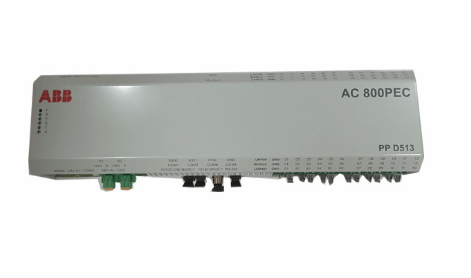 ABB 3BHE039724R2643 PPD513 high-performance programmable controller module
 -
.png) Samsung SSAS21-RTD Resistance Temperature Detector Input Module
Samsung SSAS21-RTD Resistance Temperature Detector Input Module -
.png) Samsung SSAS21-DO Digital Output Module
Samsung SSAS21-DO Digital Output Module -
Samsung SSAS21-DI Digital Input Module
-
.png) Samsung SSAS21-CPU Central Processing Unit Module
Samsung SSAS21-CPU Central Processing Unit Module -
 Samsung SMTB-RTD RTD/TC Terminal Board
 -
.png) Samsung SMTB-AI Analog Input/Output Terminal Board
Samsung SMTB-AI Analog Input/Output Terminal Board -
Samsung SMTB-DO Digital Output Terminal Board
-
.png) Samsung SMTB-DI Digital Input Terminal Board
Samsung SMTB-DI Digital Input Terminal Board -
SAMSUNG SMBK-12 IOU Rack Backplane
-
SAMSUNG SMBK-08 IOU Rack Backplane
-
SAMSUNG SMPS-08 Rack Power Module
-
.png) SAMSUNG SMCOM-08 Communication Expansion Card
SAMSUNG SMCOM-08 Communication Expansion Card -
SAMSUNG SMPI-8 Pulse Count Input Module
-
SAMSUNG SMTC-8 Thermocouple Input Module
-
SAMSUNG SMAOC-12 Analog Output Module (12CH)
-
SAMSUNG SMAOC-8 Analog Output Module (8CH)
-
SAMSUNG SMAIC-12 Analog Current Input Module (12CH)
-
SAMSUNG SMRTD-8 RTD Pt100 Temperature Input Module (8CH)
-
SAMSUNG SMAIC-8 Analog Input Module (8CH)
-
SAMSUNG SMDO-8 Digital Output Module (8CH)
-
SAMSUNG SMDI-8 Digital Input Module (8CH)
-
 SAMSUNG SMCPU-08 Central Processing Unit Controller
 -
 Embedded MXM GPU Modules EGX-MXM-A4500 ADLINK
 -
 Embedded MXM GPU Modules EGX-MXM-AD2000 ADLINK
 -
 ADLINK Embedded MXM GPU Modules EGX-MXM-AD3500
 -
 ADLINK Embedded MXM GPU Modules EGX-MXM-AD5000
 -
 Embedded MXM GPU Modules EGX-MXM-AD ADLINK
 -
 Embedded MXM GPU Modules MXM-AXe ADLINK
 -
 ADLINK Embedded MXM GPU Modules EGX-MXM-BW500
 -
 Embedded MXM GPU Modules EGX-MXM-BW2000 ADLINK
 -
 ADLINK Embedded MXM GPU Modules EGX-MXM-BW4000
 -
 Embedded MXM GPU Modules EGX-MXM-BW5000 ADLINK
 -
SAMSUNG SSAS-PRO SPTB-AI dedicated analog input terminal board
-
SAMSUNG SSAS-PRO SPTB-DO dedicated digital output terminal board
-
SAMSUNG SSAS-PRO SPTB-DI dedicated terminal board
-
SAMSUNG SSAS-PRO SPBK-X32-12 Heavy-duty 8-slot system chassis backplane
-
SAMSUNG SSAS-PRO SPBK-X32-08 Heavy-duty 8-slot system chassis backplane
-
SAMSUNG SSAS-PRO SPSU-X32 heavy-duty rack-mounted
-
SAMSUNG SSAS-PRO SPIRU-16 versatile universal mixed I/O module
-
SAMSUNG SSAS-PRO SPRI-16 RTD Temperature Input Module
-
SAMSUNG SSAS-PRO SPAO-8 Analog Output Module
-
SAMSUNG SSAS-PRO SPAI-16 Analog Input Module
-
.png) SAMSUNG SSAS-PRO SPRDO-16 Relay digital output module
SAMSUNG SSAS-PRO SPRDO-16 Relay digital output module -
SAMSUNG SSAS-PRO SPDO-16 (Transistor Digital Output Module)
-
SAMSUNG SSAS-PRO SPDI-24 high-density digital input module
-
SAMSUNG SPDI-16 (Digital Input Module)
-
 ADLINK 3U Enclosures & Systems AD-3100
 -
 Power Supplies cPS-H300S/AC ADLINK
 -
Power Supplies cPS-H300S/AC ADLINK