Woodward 85018V1 Turbine Control Parameters
Turbine Control Parameters
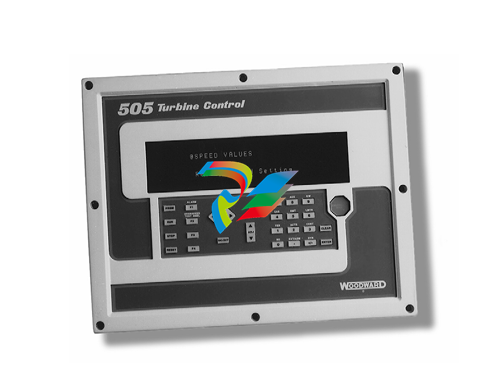
The 505E interfaces with two control valves (HP & LP) to control two parameters
and limit an additional parameter, if desired. These two controlled parameters are
typically speed (or load) and extraction/admission pressure (or flow), however,
the 505E could be utilized to control or limit: turbine inlet pressure or flow,
exhaust (back) pressure or flow, first stage pressure, generator power output,
plant import and/or export levels, compressor inlet or discharge pressure or flow,
unit/plant frequency, process temperature, or any other turbine related process
parameter. Refer to Volume 2 for details on applications.
Communications
The 505E can communicate directly with plant Distributed Control Systems
and/or CRT based operator control panels, through two Modbus® *
communication ports. These ports support RS-232. RS-422. or RS-485
communications using ASCII or RTU MODBUS transmission protocols.
Communications between the 505E and a plant DCS can also be performed
through hardwired connections. Since all 505E PID setpoints can be controlled
through analog input signals, interface resolution and control is not sacrificed.
*—Modbus is a trademark of Schneider Automation Inc.
Additional Features
The 505E also provides the following features: First-Out Trip Indication (5 total
trip inputs), Critical Speed Avoidance (2 speed bands), Auto Start Sequence (hot
& cold starts), Dual Speed/Load Dynamics, Zero Speed Detection, Peak Speed
Indication for Overspeed trip, and Isochronous Loadsharing between units.
Using the 505E
The 505E control has two normal operating modes, the Program Mode and the
Run Mode. The Program Mode is used to select the options needed to configure
the control to your specific turbine application. Once the control has been
configured, the Program Mode is typically never again used, unless turbine
options or operation changes. Once configured, the Run Mode is used to operate
the turbine from start-up through shutdown. In Addition to the Program and Run
modes, there is a Service Mode which can be used to enhance system operation
while the unit is running. Refer to Volume 2 for information on the Service Mode.
505E Inputs and Outputs
Control Inputs
Two speed inputs which are jumper configurable for MPU (magnetic pickup units)
inputs or proximity probes.
Six analog inputs are available. One is dedicated as the extraction/admission
input. The remaining five are configurable. The sixth analog input has isolation
circuitry and should be used for a self-powered signal that is not isolated.
Sixteen contact inputs are available. Four are dedicated for shutdown, reset,
raise speed setpoint, and lower speed setpoint. Another two contact inputs must
be dedicated for generator breaker and utility tie breaker if the control is used in a
generator application. Ten additional contact inputs can be configured. If the unit
is not used in a generator application, then twelve additional contact inputs can
be configured.
Four function keys on the front panel of the control. F1 and F2 are dedicated to
alarm and overspeed test, respectively. F3 and F4 can be used to enable or
disable various functions of the control.
Control Outputs
Two actuator outputs with linearization curves for the HP and the LP valve
outputs.
Six 4–20 mA outputs, for meters or other readouts.
Eight Form-C relay contact outputs, six that are configurable. The two dedicated
relay outputs are for shutdown and alarm indication.
Control Communications
Two Modbus ports, to be used as control interfaces. The protocol can be either
ASCII or RTU and the communications can be RS-232. RS-422. or RS-485.
One computer (PC) port to be used for program configuration storage.
An overview of the 505E functions is shown in Figure 1-1. Use this block diagram
to match the control features to the site-specific application required.
The 505E Digital Governor is designed to control extraction, extraction/
admission, or admission steam turbines. The difference between these turbines
is the capability of the turbine to allow low pressure steam, which is at a lower
pressure than the inlet, to enter and/or exit the turbine. An extraction turbine
allows the lower pressure (extraction) steam to exit the turbine only and will have
a non-return valve in the extraction header/line to prevent steam from entering
the turbine. An admission turbine (also called induction) will allow excess header
steam to enter the turbine through the low pressure inlet. An extraction/admission
turbine will allow low pressure header steam to enter or exit the turbine
depending on system pressures. A turbine with admission capability will have a
stop valve or trip-and-throttle valve in the low pressure line to prevent steam from
entering the turbine when the unit is tripped. The type of turbine used will depend
on the system requirements and must be designed by the turbine manufacturer
to perform the functions required.
The 505E has two independent control channels available, the speed/load and
auxiliary controllers. The outputs of these two controllers are low-signal-selected
(LSS) to provide to speed/load demand signal to the ratio/limiter. In addition to
-
 HONEYWELL 51400596-100
 -
 HONEYWELL 51401291-100 board card
 -
 HONEYWELL 51401642-150 I/O LINK MODULE
 -
 Honeywell LCN‑E Hub Power Supply 38500148‑300
 -
 Honeywell LCN‑E Hub redundant 38500143‑202 Twisted‑pair LCN
 -
 Honeywell LCN‑E Hub non‑redundant,38500143‑102
 -
Honeywell Enhanced Micro‑TDC‑3000 System Unit MX‑DTAC01K2
-
 Honeywell Enhanced Micro‑TDC‑3000 System Unit MX‑DTAB01K2
 -
 Honeywell Enhanced Micro‑TDC‑3000 System Unit MT11‑520
 -
 Honeywell STI‑CE Smart Transmitter Interface 51304516‑150
 -
 Honeywell STI Smart Transmitter Interface 51304516‑100 MC‑PSTX02
 -
 Honeywell ulse Counter IOP,51304386‑100.MU‑PPIX02
 -
 Honeywell DO Digital Output IOP‑CE 51304487‑150 CE version
 -
.png) Honeywell DO Digital Output IOP 51304487‑100 MC‑PDOX02
Honeywell DO Digital Output IOP 51304487‑100 MC‑PDOX02 -
 Honeywell TDC‑3000 SOE DI IOP,51402625-175 MC‑PDIS12
 -
 Honeywell TDC‑3000 DI Digital Input IOP‑CE 51304485‑150
 -
Honeywell TDC‑3000 DI Digital Input IOP 51304485‑100 MC‑PDIX02
-
Honeywell TDC‑3000 AO Analog Output IOP 51304757‑100 MU‑PAOX02
-
Honeywell TDC‑3000 TC Thermocouple IOP 51304756‑100 MU‑TAMT03
-
 Honeywell TDC‑3000 51304755‑100 MU‑TAMR03
 -
 Honeywell TDC‑3000 LLAI Multiplex AI IOP,51304362‑150
 -
 Honeywell TDC‑3000 HLAI Analog Input IOP‑CE,51304363‑150
 -
 Honeywell TDC‑3000 HLAI Analog Input IOP,51304363‑100.4‑20mA
 -
Honeywell TDC‑3000 HPM Power Supply,51401731‑100
-
 Honeywell TDC‑3000 Standard 1986.HPM High‑Performance PM CPU,51402362‑100
 -
Honeywell TDC‑3000 APM Advanced Process Manager CPU,51304459‑100
-
Honeywell TDC‑3000 Standard 1986.PM Process Manager CPU,51304362‑100
-
Honeywell TDC‑3000 NIM Network Interface Module,51304481‑200
-
 Honeywell TDC‑3000 NIM Network Interface Module 51304481‑100
 -
 Honeywell TDC‑3000 BASIC,LCN Terminator Resistor,30732052‑001.Coaxial
 -
Honeywell TDC‑3000 BASIC,Hiway Coupler,30753732-001
-
 Honeywell TDC‑3000 BASIC,LEPIU Low‑Energy PIU,4DP7APCFA309
 -
Honeywell TDC‑3000 BASIC,HLPIU High‑Level PIU,4DP7APCFA106
-
Honeywell TDC‑3000 BASIC,Multifunction Controller(TDC‑2000 DHW),4DP7MFA103
-
 Honeywell TDC‑3000 BASIC,Extended Controller(TDC‑2000 DHW),4DP7AXA102
 -
Honeywell TDC‑3000 BASIC,Basic Controller(TDC‑2000 DHW),4DP7BBA101
-
Honeywell TDC‑3000 BASIC,XLCNE2 LCN Extender,51305508‑100.Coaxial LCN
-
 Honeywell TDC‑3000 BASIC,E‑PLCG PLC Gateway,51400997‑200
 -
 Honeywell TDC‑3000 BASIC,PLNM Plant Network Module,51401163‑100
 -
 Honeywell TDC‑3000 BASIC,CG Computer Gateway,80360206‑001
 -
 Honeywell TDC‑3000 BASIC,HG High‑Speed Gateway,51304526‑100
 -
 Honeywell TDC‑3000 BASIC,HM History Module,51191596‑200
 -
Honeywell TDC‑3000 BASIC,HM History Module,51191596‑100
-
Honeywell TDC‑3000 BASIC,AM Application Module CPU,51401551‑800.K2LCN‑8
-
Honeywell TDC‑3000 BASIC,AM Application Module CPU,51401551‑600.K2LCN‑6
-
 Honeywell TDC‑3000 BASIC,AM Application Module CPU,51401551‑400,K2LCN‑4
 -
 Honeywell TDC‑3000 BASIC,AM Application Module CPU,51401551‑300.K2LCN‑3
 -
Honeywell TDC‑3000 BASIC,AM Application Module CPU,51401551‑200,K2LCN‑2
-
 Honeywell TDC‑3000 BASIC,US Universal Station CPU,51401288‑200
 -
TDC‑3000 BASIC,US Universal Station CPU,51401288‑100
-
 SHINKAWA VM-21P1 Signal Conditioner 0-50MM 24VDC
 -
 Shinkawa RiverNew Vibration Transducer VK202 Series
 -
 Shinkawa Electric VM-3E2 Vibration Monitor Module
 -
 Shinkawa JBP-47 P-22-48A-1 / P-22-48B-1 Circuit Board Module
 -
Shinkawa MODEL VM-5K DUAL VIBRATION MONITOR
-
 Shinkawa CMU-15A (CMU15A) Industrial Camera Controller
 -
 Shinkawa CMU-13A CMU13A Industrial Camera Controller
 -
 Shinkawa EFU-10 (EFU10) Spark Generator Unit
 -
 Shinkawa UTC-1000 ZUP-02C Board
 -
 Shinkawa MDP-89 MDP89 P-24-674A P-24-674B Circuit Board Module
 -
 Shinkawa CB-1011005001 Signal Cable Assembly
 -
 SHINKAWA VL-202A08L-1002 Sensor VL-08020L01 Probe Cable F84N1695
 -
 Shinkawa VK-202A2 Driver & VL-202A08L-1A72 Proximity Sensor Probe
 -
 SHINKAWA VM-703B VIBRATION MONITORING SYSTEM CARD 2R05-002-P001C
 -
 Shinkawa BH-150-03 Signal Conditioner / Preamplifier Unit
 -
 Shinkawa BH-150 BH150 Signal Conditioner / Preamplifier Unit
 -
 Shinkawa Electric VM-3D2 Thrust Monitor Module
 -
 Shinkawa LCU-37 Monitoring module
 -
Shinkawa LCU-44B-06 Local Control Unit Module
-
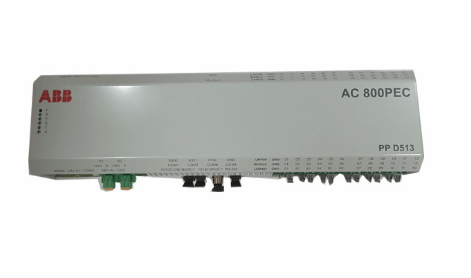 ABB 3BHE039724R2643 PPD513 high-performance programmable controller module
 -
.png) Samsung SSAS21-RTD Resistance Temperature Detector Input Module
Samsung SSAS21-RTD Resistance Temperature Detector Input Module -
.png) Samsung SSAS21-DO Digital Output Module
Samsung SSAS21-DO Digital Output Module -
Samsung SSAS21-DI Digital Input Module
-
.png) Samsung SSAS21-CPU Central Processing Unit Module
Samsung SSAS21-CPU Central Processing Unit Module -
 Samsung SMTB-RTD RTD/TC Terminal Board
 -
.png) Samsung SMTB-AI Analog Input/Output Terminal Board
Samsung SMTB-AI Analog Input/Output Terminal Board -
Samsung SMTB-DO Digital Output Terminal Board
-
.png) Samsung SMTB-DI Digital Input Terminal Board
Samsung SMTB-DI Digital Input Terminal Board -
SAMSUNG SMBK-12 IOU Rack Backplane
-
SAMSUNG SMBK-08 IOU Rack Backplane
-
SAMSUNG SMPS-08 Rack Power Module
-
.png) SAMSUNG SMCOM-08 Communication Expansion Card
SAMSUNG SMCOM-08 Communication Expansion Card -
SAMSUNG SMPI-8 Pulse Count Input Module
-
SAMSUNG SMTC-8 Thermocouple Input Module
-
SAMSUNG SMAOC-12 Analog Output Module (12CH)
-
SAMSUNG SMAOC-8 Analog Output Module (8CH)
-
SAMSUNG SMAIC-12 Analog Current Input Module (12CH)
-
SAMSUNG SMRTD-8 RTD Pt100 Temperature Input Module (8CH)
-
SAMSUNG SMAIC-8 Analog Input Module (8CH)
-
SAMSUNG SMDO-8 Digital Output Module (8CH)
-
SAMSUNG SMDI-8 Digital Input Module (8CH)
-
 SAMSUNG SMCPU-08 Central Processing Unit Controller
 -
 Embedded MXM GPU Modules EGX-MXM-A4500 ADLINK
 -
 Embedded MXM GPU Modules EGX-MXM-AD2000 ADLINK
 -
 ADLINK Embedded MXM GPU Modules EGX-MXM-AD3500
 -
 ADLINK Embedded MXM GPU Modules EGX-MXM-AD5000
 -
 Embedded MXM GPU Modules EGX-MXM-AD ADLINK
 -
 Embedded MXM GPU Modules MXM-AXe ADLINK
 -
 ADLINK Embedded MXM GPU Modules EGX-MXM-BW500
 -
 Embedded MXM GPU Modules EGX-MXM-BW2000 ADLINK
 -
 ADLINK Embedded MXM GPU Modules EGX-MXM-BW4000
 -
 Embedded MXM GPU Modules EGX-MXM-BW5000 ADLINK
 -
SAMSUNG SSAS-PRO SPTB-AI dedicated analog input terminal board
-
SAMSUNG SSAS-PRO SPTB-DO dedicated digital output terminal board
-
SAMSUNG SSAS-PRO SPTB-DI dedicated terminal board
-
SAMSUNG SSAS-PRO SPBK-X32-12 Heavy-duty 8-slot system chassis backplane
-
SAMSUNG SSAS-PRO SPBK-X32-08 Heavy-duty 8-slot system chassis backplane
-
SAMSUNG SSAS-PRO SPSU-X32 heavy-duty rack-mounted
-
SAMSUNG SSAS-PRO SPIRU-16 versatile universal mixed I/O module
-
SAMSUNG SSAS-PRO SPRI-16 RTD Temperature Input Module
-
SAMSUNG SSAS-PRO SPAO-8 Analog Output Module
-
SAMSUNG SSAS-PRO SPAI-16 Analog Input Module
-
.png) SAMSUNG SSAS-PRO SPRDO-16 Relay digital output module
SAMSUNG SSAS-PRO SPRDO-16 Relay digital output module -
SAMSUNG SSAS-PRO SPDO-16 (Transistor Digital Output Module)
-
SAMSUNG SSAS-PRO SPDI-24 high-density digital input module
-
SAMSUNG SPDI-16 (Digital Input Module)
-
 ADLINK 3U Enclosures & Systems AD-3100
 -
 Power Supplies cPS-H300S/AC ADLINK
 -
Power Supplies cPS-H300S/AC ADLINK
-
 CPCI Serial Peripheral cPCI-A3H10 ADLINK
 -
 ADLINK CPCI Serial Peripheral cPCI-A3XMC
 -
 CPCI Serial Peripheral cPCI-A3H20 ADLINK
 -
 CPCI Serial Peripheral cPCI-A3MXM ADLINK
 -
 ADLINK CPCI Serial Peripheral cPCI-A3COM
 -
 CPCI Serial Peripheral cPCI-A3USB ADLINK
 -
 ADLINK CPCI Serial Peripheral cPCI-A3ETH
 -
CPCI Serial Peripheral cPCI-A3CAN ADLINK
-
 3U CompactPCI Serial Blades cPCI-A3525 Series